
For Policy Makers
QUALITY LABEL
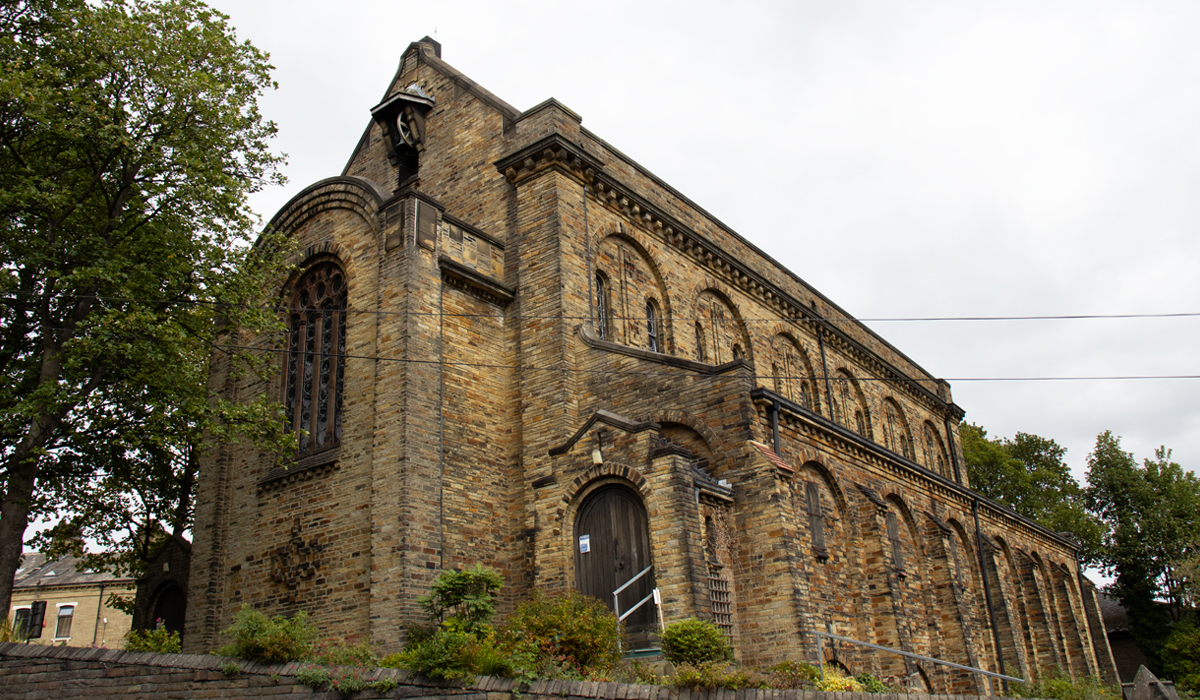
Heating St Chads Church with IR
Previously, the church was heated by gas and electric at a significant cost; running costs in January 2021 were £1,600 for the month. The gas boiler was condemned in April 2021 and, subsequently, the Church was without heating throughout 2022 and 2023.
The church was looking for a new heating system that would satisfy the Church of England’s green credentials.
Built in 1912-14, the beautiful interior of St Chads is hard to heat given both its heritage and scale, as well as the requirement to fit the heating within the historic architecture. Historic features include decorative mosaic tiling, stained glass work and detailed craftsmanship in features including door furniture. In addition, the church was looking for a sustainable heating solution that would meet the Church of England’s objective to reduce carbon emissions in the move to net zero.
St. Chads Church (Bradford, UK) – a project of HERSCHEL INFRARED
Photos: Herschel Infrared Ltd.
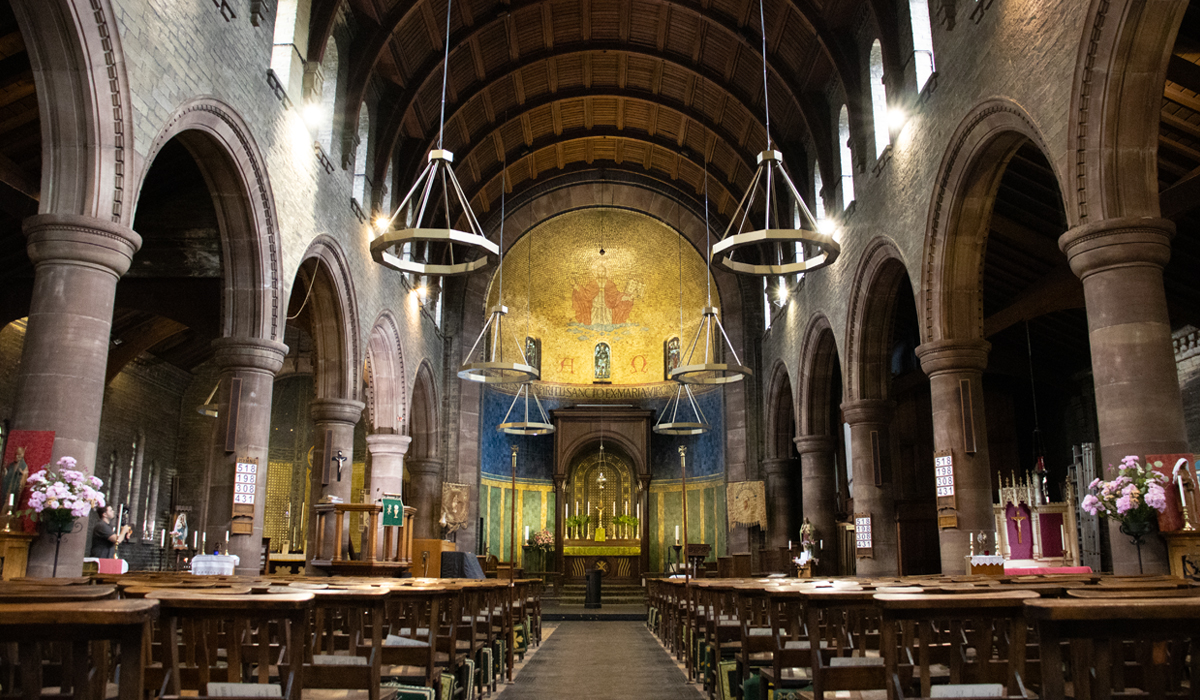
Herschel Halo infrared heaters.

FACTS AND FIGURES
| Name of the project | St Chads Church |
| Typology | Heritage |
| Location | Bradford (UK) |
| Completion | Built in 1914, new heating system in 2024 |
| Type | Refurbishment |
| Construction | |
| Energy standard | |
| Heated floor area | |
| Heating load | |
| Heating system | 9 x Halo 7.8 kW infrared heaters |
| Hot water supply | |
| Ventilation | |
| Photovoltaics | |
| Date | 08.31.2026 |
St Chads Church was specified with 9 x Halo 7.8kW infrared heaters to heat the interior. The Halo heaters have been installed with two rows of four Halos from the Chancel to the rear of the Nave. These are controlled in side-by-side pairs to create the required zones for flexible management and operation. There is also one Halo within the Lady Chapel.
The Halos have led to a significant reduction in energy costs over the previous system. As an example, the heating costs in January 2021 from the previous system (through a mixture of gas and electric) were £1,600. The comparative costs from heating the church with Halo in January 2024 were £465, a huge saving of £1,135 on running costs. A like-for-like comparison, comparing the costs of the previous gas system at the now higher tariff, would result in an even bigger saving on running costs if the previous gas system was still in place.
The switch to an all-electric heating solution has also resulted in the Church reducing its carbon footprint, one of the key drivers in choosing the Halo church heating solution.

Berrynarbor Manor Hall (Devon, UK)
The Hall was built in 1914 as an extension to the former manor house which dates back to the late 15th Century. The hall heating consisted of five 3kW electric convector heaters which were regularly left on by the hirers when they departed. There was also a central heating system with the gas boiler and controls located in the former manor house – now used daily by a preschool.
The restrictive access to the central heating controls meant the heating was often left on after the hall had been used or not turned on when it was needed! The distance between the boiler and the radiators also led to significant heat loss as the water flowed through the extended pipework. As a result, the radiators never got hot enough to effectively heat the hall.
The Committee was looking for a heating system which would warm the Hall to a comfortable temperature in a relatively short time, thereby avoiding the need to heat the hall when it was not in use. The ability to accurately control the temperature was also an important consideration to avoid wasting valuable energy and to cater for the different temperature requirements of the various activities taking place in the Hall. The high pitched roof had been a problem for the convection heaters as the warm air produced was lost into the roof space giving little immediate benefit to the occupants. The toilets and a storage area also needed to be warmed but to a lower temperature than the Hall. It, therefore, made sense to divide the building into separate heating zones each with their own thermostatic controls.

The Hall heating comprised of eight ETHERMA EZ 2 kW double-panel infrared heaters. These were suspended in two rows of four, 3.5m above the floor and controlled by a wall mounted eTOUCH eco thermostat through an electrical contactor.
The medium-wave infrared heaters provided an ideal solution for the Hall, whilst wall-mounted long-wave infrared panels were more appropriate in the toilets and storage rooms where the ceiling height was lower. Unlike the convection heating, infrared directly warms the occupants, quickly making them feel more comfortable. This allows the room thermostat to be lowered by a few degrees (e.g. from 21°C to 19°C) whilst still maintaining the same level of thermal comfort. A reduction of the temperature by 1°C results in an energy savings of up to 6%.
In rooms with high ceilings like Berrynarbor Village Hall, the temperature difference between the occupied zone and the ceiling is often significant, between 10-15°C. Equalizing the temperature difference using suspended infrared heaters can reduce this loss by as much as 30% while making optimal use of the heat which develops when the infrared waves hit a thermal mass, such as the floor, walls and people. The energy is absorbed and the warmed surfaces then heat the air in the occupied zone. As a result, the temperature difference between ceiling and floor is reduced.
The different rooms were treated as separate heating zones, each controlled by programmable thermostats. Precise control of the heating saves operating costs, avoids wasting valuable energy and improves thermal comfort. The use of radio-controlled, programmable thermostats avoided the need for new cable routes and simplified the installation process.