
For Policy Makers
QUALITY LABEL
Decarbonating Transport for London’s Croydon Tram Depot with IR
As part of its wider carbon-reduction strategy and the Mayor of London’s ambition for a net-zero London by 2030, Transport for London (TfL) is undertaking a major programme to decarbonise heating and improve energy efficiency across its operational estate.
One of the sites focused on within this programme was the Therapia Lane tram depot in Croydon; a large, industrial, 24/7 operational facility which was previously heated by an ageing and inefficient gas boiler system.
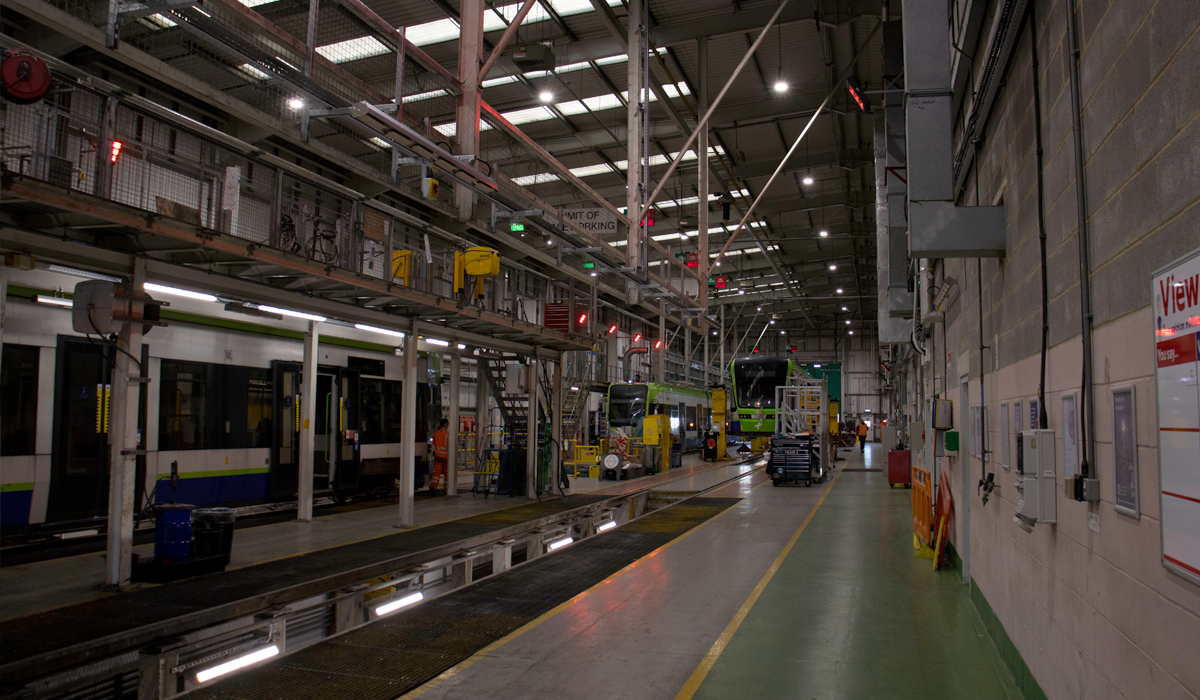
The tram depot is a huge space, with multiple operational activities and loading bays/work spaces with varying heating requirements, and so needed a highly controllable electric heating system that provided the required comfort levels for the multiple different operational areas. The tram shed building opens its doors regularly to let trams in for maintenance, and the previous convection-based system proved to be inefficient, as the hot air would easily escape when the shed doors were open.
Tram depot (London, UK) – a project of HERSCHEL INFRARED
Photos: Herschel Infrared Ltd.

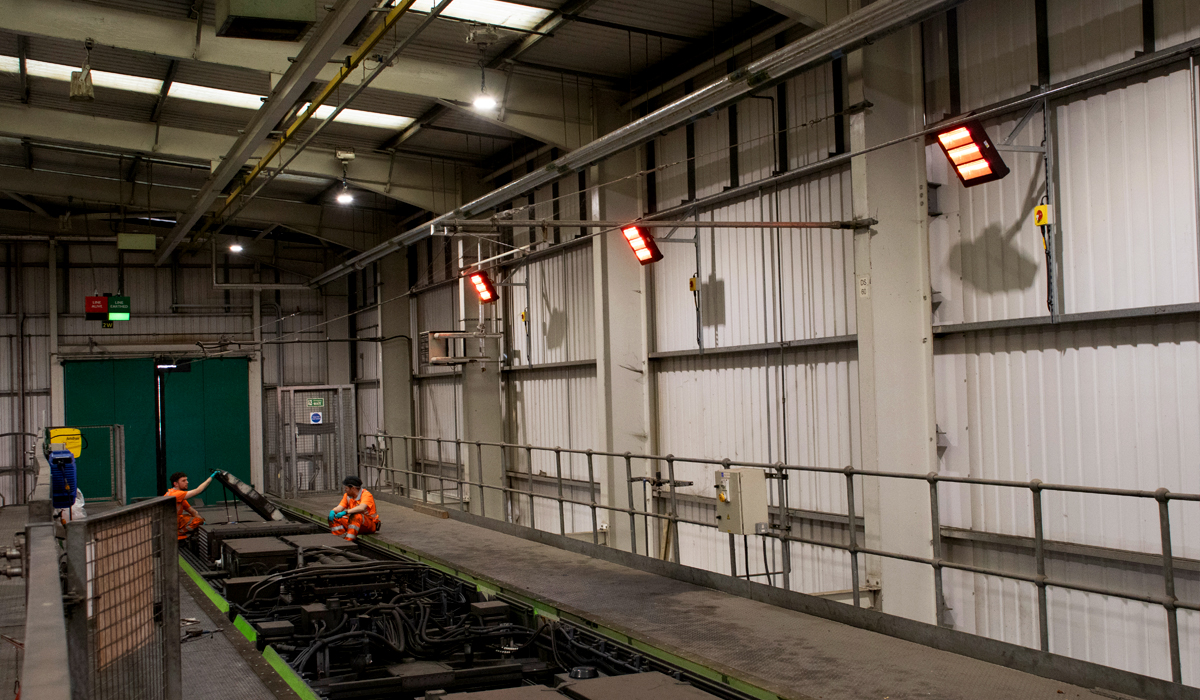
Herschel Infrared Advantage heaters chosen to provide warmth in workstations (above) and Herschel Vulcan infrared heaters heating Tfl tram depot (below).
FACTS AND FIGURES
| Name of the project | Therapia Lane Tram Depot |
| Typology | Industrial |
| Location | London (UK) |
| Completion | |
| Type | Refurbishment |
| Construction | |
| Energy standard | |
| Heated floor area | |
| Heating load | |
| Heating system | 60 infrared heaters |
| Hot water supply | |
| Ventilation | |
| Photovoltaics | |
| Date | 08.31.2026 |
To meet the requirements, a total of 60 infrared heaters were installed; 43 high performance, UK-manufactured longwave Herschel Advantage heaters were chosen along with 17 low glare, shortwave Herschel Vulcan heaters.
This choice of different heater types ensured that all areas requiring instant, on-demand heating were effectively heated as required, whilst other heaters were specified to contribute to the overall ambient temperature on a timed/temperature setting. This allowed comfort and efficiency to be optimised based on workflow patterns and controllability demands.
All of the installed heaters are operated through a UK-manufactured Herschel control system which allows for:
• Zonal heating control
• Timed scheduling
• Energy monitoring for ongoing carbon-reduction tracking
• Fault-finding and diagnostics
By heating only occupied zones, the system significantly reduces energy use and carbon emissions compared to heating the entire air volume which is a major advantage in large, draught-prone depots.
The heaters radiate heat outwards and downwards, ensuring that operatives remain comfortable within the effective radiant area, even when ambient air temperatures fall below minimum workplace thresholds due, for example, to open depot doors. The InterLED project team was able to use Thermal Comfort Index modelling to demonstrate this.
A Model for Large Scale Zero Carbon Heating
Large operational buildings such as transport depots have always been considered ‘hard to heat’ due to high ceilings, open bays, constant vehicle movement and frequent draughts.
As infrared heats people and surfaces directly and is not reliant on heating air, it is a much more effective heating system for hard to heat spaces with large open doors. The project demonstrates what is possible in replacing outdated fossil-fuel systems with environmentally friendly, cleaner technologies in large, hard to heat spaces.